
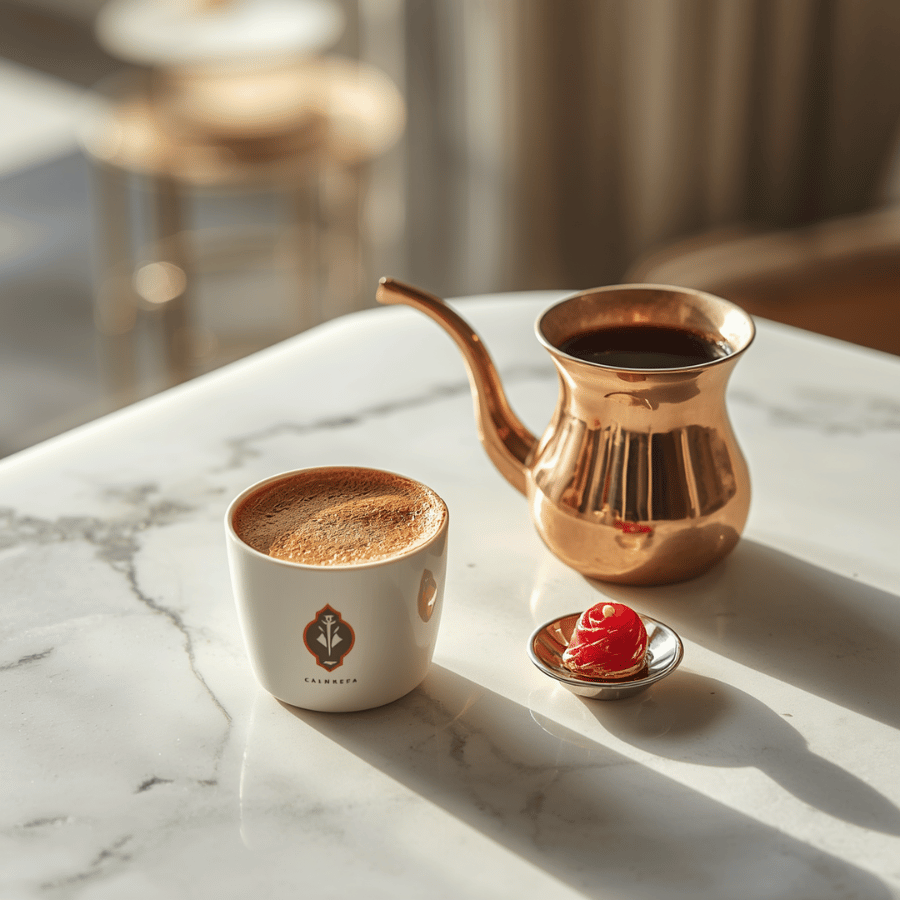
Turkish coffee is more than just a beverage; it is a cultural experience steeped in tradition. Originating from the Ottoman Empire, this method of coffee preparation is characterized by its unique brewing style, rich flavors, and thick, aromatic texture. The process involves finely ground coffee, water, and sometimes sugar, all brewed together in a special pot called a cezve. Each cup is a journey through history, connecting us to the rituals and stories of a time when coffee was a luxury reserved for the elite. The result is a strong, unfiltered coffee that is as much about the sensory experience as it is about the taste. Join me on this journey into the world of Turkish coffee, where every sip tells a story.
Our Story With This Recipe
I still remember the first time I experienced authentic Turkish coffee during a trip to Istanbul. It was early morning, and the aroma of the freshly brewed coffee wafted through the bustling streets. I found a small café, nestled between colorful shops, where an older man expertly prepared the coffee in a cezve. As I watched him pour the rich, dark brew into a tiny cup, I felt a connection to the culture that transcended language. Each sip was an explosion of flavor, the perfect balance of bitterness and sweetness, served with a side of warm conversation.
Why You’ll Love This Recipe
One of the primary reasons you’ll love Turkish coffee is its rich, full-bodied flavor profile. The coffee grounds remain in the cup, creating a thick texture that’s unlike any other brewing method. The careful balance of water and coffee allows for a unique crema to form, enhancing the sensory experience. Moreover, the simplicity of the ingredients means you can enjoy an authentic beverage at home without the need for elaborate equipment. Plus, the ritual of preparation and serving adds a special touch to your coffee routine, making it a delightful experience for both you and your guests.
The Story Behind This Recipe
Turkish coffee has a rich history that dates back to the 15th century. It was introduced to Europe through the Ottoman Empire, where it quickly became a symbol of sophistication and social gatherings. The unique method of preparation requires a specific grind, often referred to as ‘powdered’ due to its fineness. Traditionally, coffee is served in small cups, allowing for a concentrated experience of taste and aroma. The practice of coffee drinking in Turkey also includes a fascinating custom of fortune-telling with the coffee grounds left at the bottom of the cup, adding an element of intrigue and connection among friends and family.
Ingredients
- 2 tablespoons Finely ground Turkish coffee (Use a high-quality Arabica blend for best flavor.)
- 1 cup Water (Filtered water is preferred for a cleaner taste.)
- 1-2 teaspoons Sugar (Optional, adjust according to preference.)
Equipment Needed
- Cezve (ibrik)
- Demitasse cups
- Heat source (stovetop or induction)
Instructions
- Begin by measuring out 1 cup of filtered water. Use the coffee cup you will serve the coffee in to ensure the right amount.
- Add 2 tablespoons of finely ground Turkish coffee to the cezve. If you prefer sweet coffee, add 1-2 teaspoons of sugar at this stage.
- Pour the measured water into the cezve over the coffee and sugar. Stir gently to combine the ingredients. This will help the coffee bloom and release its aromatic oils.
- Place the cezve on low heat. As it heats, watch for the coffee to begin to froth and bubble, usually around 2-3 minutes. Do not stir once it's on the heat.
- Just before it boils, remove the cezve from the heat. Allow it to settle for a few seconds. This helps to create the signature crema.
- Return the cezve to the heat once more. Repeat the frothing and settling process 2-3 times for a richer flavor and thicker texture.
- Carefully pour the coffee into the demitasse cups, ensuring to leave the grounds in the cezve. Serve immediately and enjoy the experience!
Pro Tips
- Use a high-quality, finely ground coffee to enhance the flavor. Look for coffee specifically labeled as Turkish coffee.
- The key to achieving the perfect crema is to control the heat carefully. Avoid boiling the coffee for the best results.
- Experiment with sugar levels! Start with a small amount and adjust according to your taste preference; traditional Turkish coffee can be served unsweetened, moderately sweet, or very sweet.
- Allow the coffee to settle for a few seconds before pouring to prevent grounds from ending up in your cup.
- Serve with a glass of water on the side to cleanse the palate before enjoying your coffee.
Shop This Recipe
Variations & Modifications
Turkish coffee can be enjoyed in various ways to suit different palates. One popular variation is ‘Sahlep,’ which adds a touch of orchid root powder for a unique flavor and creaminess. Another delightful option is ‘Mastic Turkish Coffee,’ where a hint of mastic resin is added for an aromatic twist. For those who prefer a touch of spice, consider adding a pinch of cardamom during the brewing process, enhancing the coffee’s depth with a warm, aromatic note. Lastly, some enjoy their Turkish coffee infused with a splash of rosewater, providing a floral essence that beautifully complements the coffee’s richness.
Serving & Pairing Suggestions
Turkish coffee pairs exceptionally well with traditional sweets such as baklava or Turkish delight. The syrupy sweetness of these desserts contrasts beautifully with the robust flavor of the coffee. Additionally, a simple biscuit or a piece of dark chocolate can enhance the tasting experience, offering a delightful balance of flavors. For a savory option, consider serving it with a slice of feta cheese and olives to round out the experience.
Storage & Make-Ahead Instructions
For the best flavor, Turkish coffee should be enjoyed fresh, immediately after brewing. It is not advisable to store brewed coffee, as the grounds can continue to release bitter compounds. However, if you have leftover coffee, it can be kept in an airtight container in the refrigerator for up to a day. Reheat gently on the stovetop, but avoid boiling to maintain the coffee’s integrity.
Troubleshooting
If your coffee is too bitter, the grind may be too fine, or it may have been over-extracted. Ensure you are using the correct grind size and monitor the brewing time closely. If your coffee lacks flavor, you might need to increase the coffee-to-water ratio. Alternatively, using stale coffee beans can lead to a flat taste, so always opt for fresh coffee. If you experience grounds in your cup, ensure to let the coffee settle before pouring. Lastly, if your coffee doesn’t froth well, it might be due to too high a heat level, so adjust accordingly.
Nutritional Information
Turkish coffee is low in calories, especially when consumed without sugar. A standard serving contains approximately 2 calories, making it a guilt-free indulgence. It is also rich in antioxidants, which can contribute to overall health. However, be mindful of caffeine content, as it is relatively high, especially compared to other brewing methods. Those sensitive to caffeine should enjoy it in moderation.
Frequently Asked Questions
Q: Can I use regular coffee grounds for Turkish coffee?
A: It’s best to use coffee that is specifically ground for Turkish coffee, which is much finer. Regular coffee grounds may not produce the desired flavor and crema.
Q: Do I need special equipment to make Turkish coffee?
A: A cezve (ibrik) is ideal for brewing Turkish coffee, but any small pot can work in a pinch. The key is to control the heat carefully.
Q: What type of coffee beans are best for Turkish coffee?
A: Arabica beans are preferred for their rich flavor. Look for a blend that is specifically labeled as suitable for Turkish coffee.
Q: Is Turkish coffee served hot or cold?
A: Turkish coffee is traditionally served hot in small cups, allowing you to savor its robust flavor.
Q: Can I make Turkish coffee without sugar?
A: Absolutely! Turkish coffee can be enjoyed unsweetened, allowing you to fully appreciate its rich flavors.