
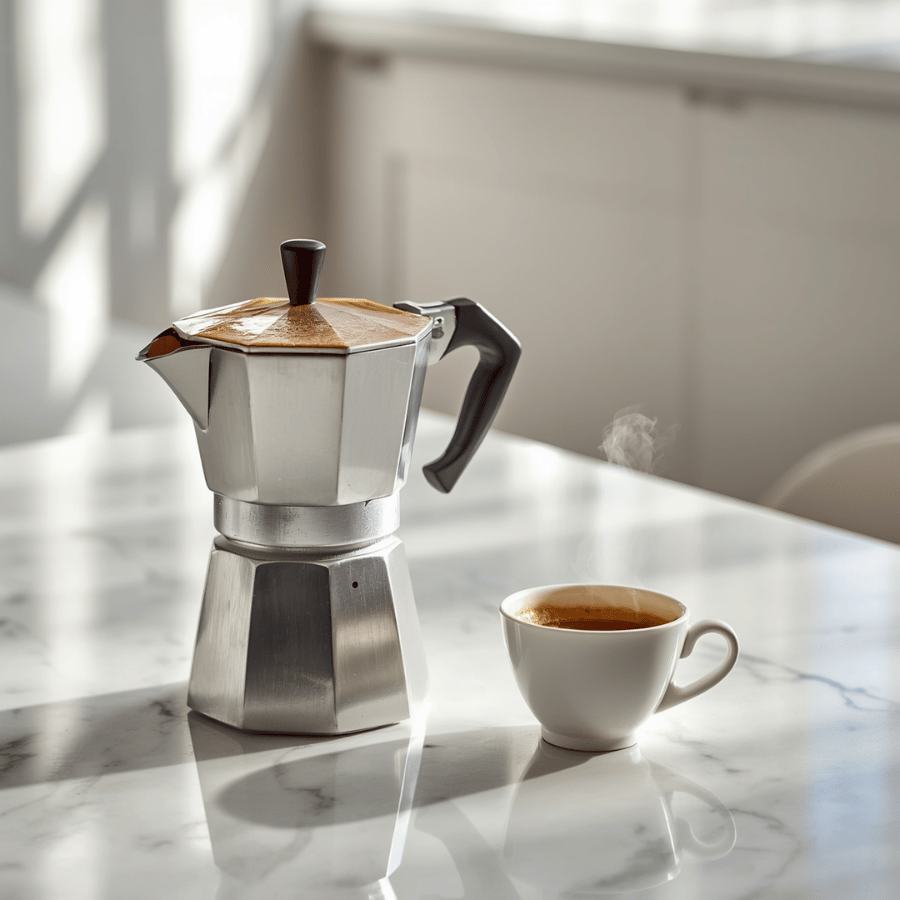
The Moka Pot is a beloved brewing method that delivers a rich, espresso-like coffee experience without the need for an espresso machine. Originating from Italy, this stovetop wonder brews coffee through steam pressure, creating a unique flavor profile that coffee enthusiasts adore. With its compact design and straightforward brewing process, the Moka Pot has been a staple in Italian kitchens since the 1930s. Not only does it produce a robust cup of coffee, but it also embodies the spirit of Italian coffee culture, inviting you to slow down and savor each sip.
Our Story With This Recipe
My love affair with coffee began on a sunlit terrace in Florence, sipping a small cup of Moka Pot espresso while watching the world unfold around me. It was then I realized that coffee was more than just a drink; it was a ritual, a moment to pause and appreciate the art of brewing. Every morning since, I’ve sought to replicate that experience in my own kitchen, and the Moka Pot has become my trusted companion.
The first time I dialed in my Moka Pot, I felt like a true barista. The aroma of freshly ground beans filled my kitchen, and as I watched the coffee bubble up, I knew I was on the brink of something special. It’s a simple process, yet it teaches you so much about extraction, grind size, and the importance of timing.
As I continue to explore the nuances of coffee preparation, I find that the Moka Pot is a beautiful blend of tradition and accessibility. It invites both beginners and seasoned coffee lovers to engage with their brew, ensuring that each cup tells a story. Each morning, I’m reminded of that terrace in Florence, and it fuels my passion for coffee every day.
Why You’ll Love This Recipe
The Moka Pot is beloved for its ability to deliver a strong, aromatic cup of coffee that rivals traditional espresso. Its brewing method allows for a concentrated flavor profile, with hints of chocolate, nuts, and caramel often emerging, depending on the beans used.
One of the reasons I love the Moka Pot is the ritualistic nature of its preparation. The process encourages mindfulness; from measuring the beans to watching the coffee bubble up, it transforms the act of brewing into an experience.
Furthermore, the Moka Pot is incredibly forgiving—it’s relatively easy to achieve a great cup without the need for precise equipment. This accessibility makes it an excellent choice for both coffee novices and aficionados alike, paving the way for enjoyable experimentation.
The Story Behind This Recipe
The Moka Pot, invented by Alfonso Bialetti in 1933, revolutionized home brewing. It brought the rich, espresso-like flavors of coffee into households that might not have the space or budget for an espresso machine. The design of the Moka Pot, with its distinctive octagonal shape, is not only iconic but also functional, allowing for even heat distribution.
In Italy, the Moka Pot is more than just a coffee maker; it’s a cultural icon. Families gather around the stove, sharing stories and bonding over the brewing process. It’s a communal experience that highlights the importance of coffee in daily life, from breakfast to an afternoon pick-me-up.
One of the fascinating aspects of the Moka Pot is its reliance on steam pressure to extract flavors. Water heats in the lower chamber, creating steam that forces hot water through the coffee grounds in the filter basket. This method produces a coffee that’s bold and intense, often described as having a strong crema—a rich, foamy layer that adds to the tasting experience.
The Moka Pot is versatile, allowing for experimentation with different beans and grind sizes. Whether you favor a bright Ethiopian Yirgacheffe or a deep, chocolatey Brazilian Santos, each origin brings its unique tasting notes to the brew. As you explore the world of coffee, the Moka Pot serves as a gateway to understanding the complexities and subtleties of different beans.
Ingredients
- 1 cup Water (Use filtered water for the best taste.)
- 15 grams Coffee beans (Medium to finely ground for optimal extraction.)
Equipment Needed
- Moka Pot
- Coffee grinder
- Stovetop or heat source
- Coffee scale
- Kettle
Instructions
- Begin by measuring 15 grams of high-quality coffee beans. For this recipe, a medium to fine grind is ideal, similar to table salt. This grind size allows for optimal extraction while preventing over-extraction, which can lead to bitterness.
- Fill the lower chamber of the Moka Pot with filtered water up to the safety valve. Avoid using tap water, as it can introduce unwanted flavors. Place the coffee grounds in the filter basket, leveling them off without tamping down. This allows water to flow through evenly.
- Assemble the Moka Pot by screwing the top and bottom chambers together securely. Place the Moka Pot on medium heat. It’s essential to keep an eye on the brewing process—this is where the magic happens.
- Listen for the gurgling sound of the coffee brewing. This indicates that the water is reaching the coffee grounds, extracting the rich flavors and aromas. As the coffee begins to rise, the crema will form—a sign of a well-brewed Moka Pot espresso.
- Once the gurgling sound changes to a hissing or sputtering noise, remove the Moka Pot from the heat. Let it sit for a moment to let the coffee settle. Pour the coffee into your favorite cup, and enjoy the rich, aromatic brew.
Pro Tips
- Use freshly roasted coffee beans, ideally within two weeks of roasting, for the best flavor.
- Experiment with grind size—too fine can lead to over-extraction, while too coarse may result in under-extraction.
- Preheat your water in a kettle to reduce brewing time and promote better extraction.
- Consider adjusting your coffee-to-water ratio to suit your taste preferences; a standard starting point is 1:15.
- Always clean your Moka Pot thoroughly after each use to prevent old coffee oils from tainting future brews.
Shop This Recipe
Variations & Modifications
For a unique twist, try adding a pinch of cinnamon or a dash of vanilla extract to your coffee grounds before brewing. This can enhance the flavor profile and add an aromatic quality to your cup.
If you’re feeling adventurous, experiment with different coffee origins. A bright Ethiopian Yirgacheffe will yield floral and fruity notes, while a dark roast Colombian coffee will provide a bolder, chocolatey flavor.
You can also explore the world of milk and cream. After brewing, add steamed milk for a delicious Moka Pot cappuccino or a splash of heavy cream for a rich and indulgent treat.
For those who prefer a sweeter cup, consider adding flavored syrups or sweeteners after brewing. A drizzle of caramel or hazelnut syrup can elevate your Moka Pot experience.
Serving & Pairing Suggestions
The strong flavors of Moka Pot espresso pair beautifully with rich pastries like biscotti or a slice of almond cake. The crunchiness of biscotti complements the smoothness of the coffee, making for a delightful snack.
For a more savory option, try pairing your espresso with a slice of aged cheese. The nutty flavors of a good Parmigiano-Reggiano can enhance the coffee’s rich notes, creating an unforgettable tasting experience.
Storage & Make-Ahead Instructions
Coffee brewed in a Moka Pot is best enjoyed fresh. If you have leftover coffee, store it in an airtight container in the refrigerator for up to 24 hours. Reheat gently on the stove, but be mindful that reheating can alter the flavor. Avoid microwaving, as it can cause uneven heating and affect the coffee’s quality.
Troubleshooting
If your coffee tastes bitter, check your grind size—too fine can lead to over-extraction. Adjusting the grind to a coarser setting can help balance the flavors.
If you notice weak coffee, ensure you’re using enough coffee grounds and check that your water temperature isn’t too low. Preheating your water can help achieve a stronger brew.
If the Moka Pot is sputtering or not brewing correctly, check that the filter is clean and that the seal is tight. A loose seal can lead to steam escaping, preventing proper pressure buildup.
Nutritional Information
A typical serving of Moka Pot espresso contains minimal calories, roughly 2-5 calories per cup, depending on whether sugar or cream is added. It is low in fat and carbohydrates, making it a suitable choice for various dietary preferences. Additionally, coffee is rich in antioxidants, which can contribute positively to overall health when consumed in moderation.
Frequently Asked Questions
Q: Can I use regular coffee grounds in a Moka Pot?
A: Regular coffee grounds can be used, but for the best results, opt for a medium to fine grind to achieve optimal extraction.
Q: How do I clean my Moka Pot?
A: After each use, disassemble the Moka Pot and rinse all parts with warm water. Avoid using soap, as it can impart unwanted flavors.
Q: Can I make decaf coffee in a Moka Pot?
A: Absolutely! You can use decaffeinated coffee beans with the same grind size and brewing method.
Q: What’s the best coffee-to-water ratio for a Moka Pot?
A: A standard starting point is 1:15 (1 gram of coffee to 15 grams of water), but feel free to adjust to your taste.
Q: Is a Moka Pot espresso the same as traditional espresso?
A: While Moka Pot coffee is rich and strong like espresso, it is brewed differently and has a distinct flavor profile due to the brewing method.